I love you like
the wing must
love the bird.
No grounded
things for me–
just you, music,
words and
paper trees.
What comes
down must
go up, and
so I’ll join
you in the sky
to fly beneath
a silver moon,
to soar among
the cirrus clouds.
I love you like
the wing must
love the bird.
No grounded
things for me–
just you, music,
words and
paper trees.
What comes
down must
go up, and
so I’ll join
you in the sky
to fly beneath
a silver moon,
to soar among
the cirrus clouds.
if I told you I’d be there
would you find
the wooden bench
the white camellias
the cherry tree
would you ask my name again
and lift your face into the sun–
exactly as you did that day
would we walk along the garden path
beneath the overarching trees
and listen to the insect’s song
the thrum of things so small
that only lovers hear their
extracorporeal hum
we are too late for love
too late for all the silly things
the longing
the sweet regret
the silences
the sudden rush of words
and yet we’re here
too old to hold each other’s hand
too young to walk apart
if I told you I’d be there
would I wait alone
beneath an autumn sun
would I look up and see you there
beside me on the wooden bench
a white camellia in your hand
Look what life
has done to me–
season after season
growing in this
blasted place,
fixed beneath
a paper tree,
watching you
not seeing me.
A flower in
a sunny place,
you turn your
head so often
that I can only
hope one day
you’ll see me blooming
all the colors God
forgot to give to you,
all the colors that
have seen me through.
Bittersweet
and bitter root,
all your turning
is a madness
that the sun
has forced on you;
while I am watching
from the shadows
hoping love will
see through you.
What kind of trees
were they that
broke the color–
all tall and green
and dancing
in the slow sunlight
of an April afternoon?
Women in blue
kimonos stood
beneath the
delicate branches
snapping pictures
digital and bright.
Children played,
young mother’s
strolled, stooped
old men finished
with their lives
sat on stone benches.
An artist crouched
in a flower bed
like a wounded animal;
linen canvas stained
with a furious red.
I had come here to meet a
god and found instead a man.
We are not seen by the people we love,
but are loved by the people who see us.
That afternoon,
five thousand miles
from my home,
someone saw me
and asked where
I was from in
perfect English.
I’ve always been a person who struggled with meaning. Not the “meaning” of my life but what something means. From the time I was a kid I’ve always had to listen real hard to what people were saying–did they mean me when they said that, is there a message there for me, have I done something wrong? It’s like I speak a different language than the rest of the world and have to filter everything through a lens that is deeply clouded. Perhaps that is why I love music and poetry and art so much. I don’t need to understand; I only need to feel! As an artist, I think of my work in specific ways–drawing, mixed-media, experimental, narrative, landscape, colorful, however, because of my own confusion about “meaning” I don’t expect anyone to share my viewpoint about my work. When I approach a painting, or a poem, or a song; I bring myself and all the history that life has burdened me with as audience. If you truly want to be creative then you can’t put fences around your work. The work must be free but you have to understand that a viewer, a listener will find in your work what they need, not what you need. I invite people to tell me what they see in my drawings. Sometimes it is very intimidating! Recently a friend asked me “When did you move from the rain into the sunshine?” I was stunned! Did she see that in my drawings, did she see that in me, or was she telling me about herself? No work of art is entirely removed from the artist but the artist, certainly, cannot prevent the audience from finding meanings that are necessary to them. Good art will always transcend the artist because it allows for interpretation. You can’t tell the world that you want your art to be “free” and then get angry because someone called your drawing “a painting”, your poem “a song” or your song “a poem.” My life has taught me that meaning is at best elusive. I have survived because I’ve always understood that every work of art, that every poem, that every song is there to comfort me in this hard thing called life. What artist could ask for more?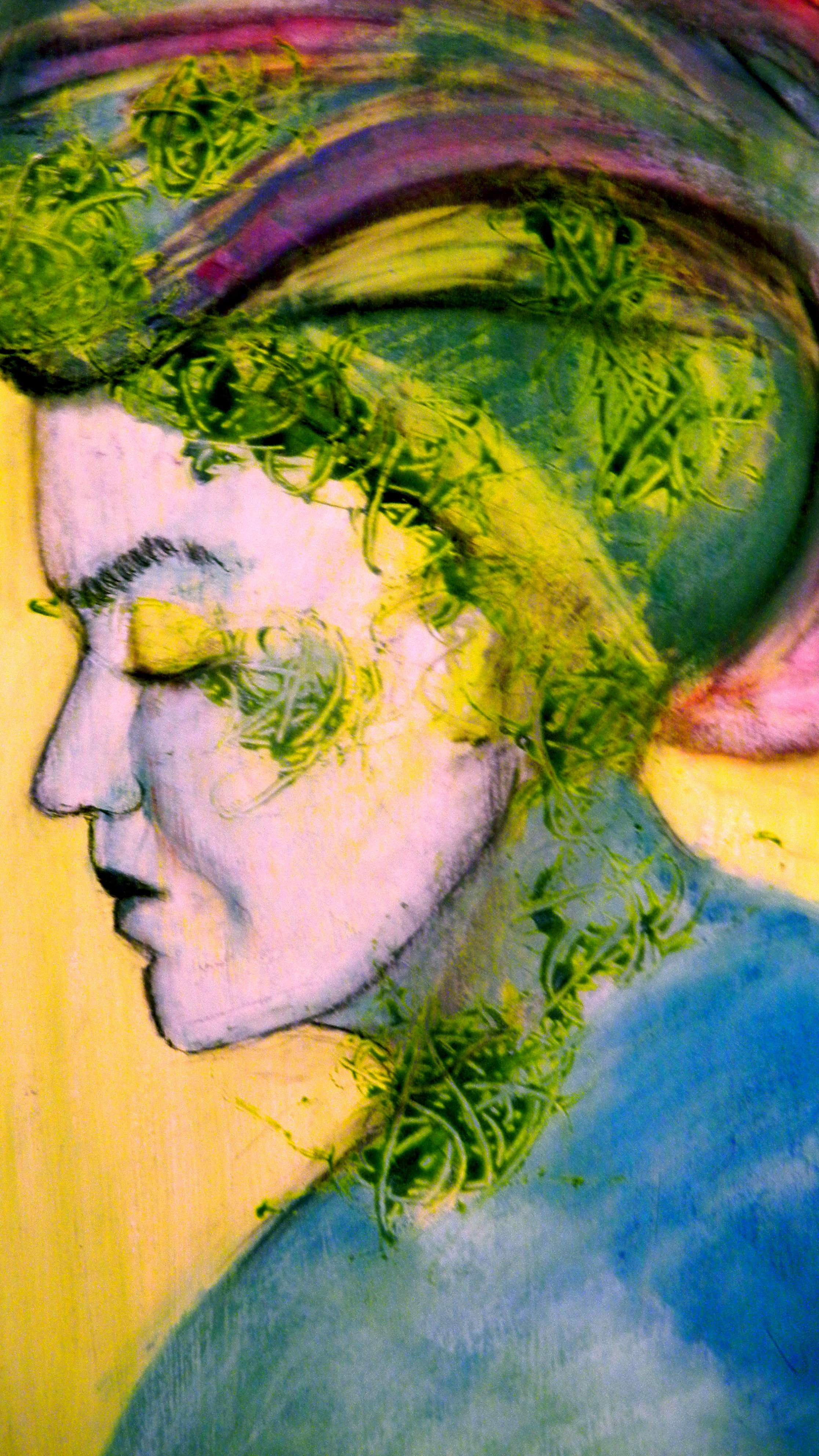
 rlmcdermott